The short answer
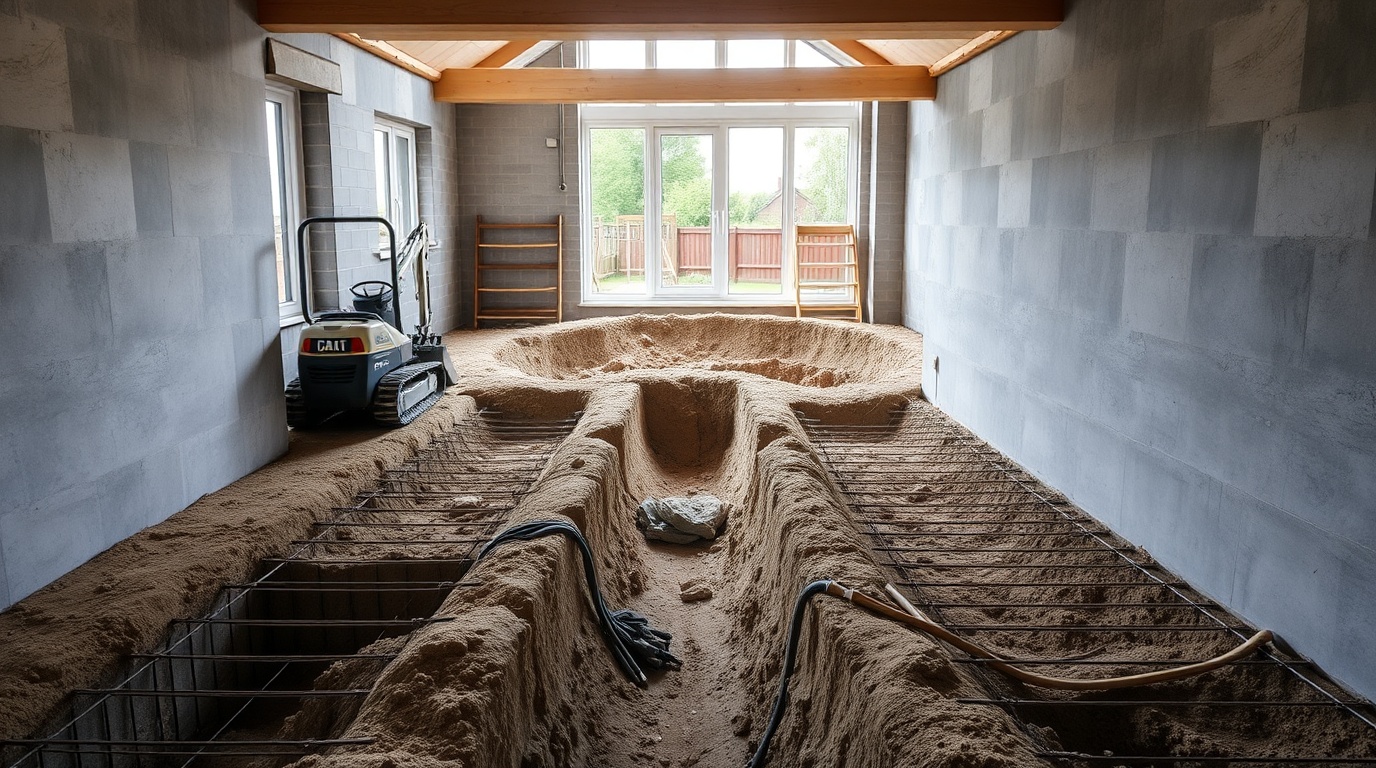
Ground reduction — also called a reduced-level dig — is excavating a site down to a lower, level formation so the build-up of sub-base, slab or foundations can start from firm, uniform ground. It removes the topsoil and any soft made ground, then takes the area down to the design level set by the engineer. Cost is usually driven by area and depth of dig plus muck away: as a rough guide it often works out around £40–£90 per square metre for a typical reduction including spoil removal, or you can think of it as machine-and-operator time at roughly £300–£600 a day plus grab-lorry loads at £250–£400 each. Deeper digs, clay or rock, a high water table and poor access all push the figure up.
Ground reduction is a standard early stage on extensions, slabs, driveways and new builds. Understanding what it covers makes the quote far easier to read. Below is what the work involves and the typical UK cost ranges.
Ground reduction at a glance
- Also calledReduced-level dig
- Per square metre (typical)£40–£90 inc. muck away
- Excavator + operator£300–£600 / day
- Grab lorry load£250–£400
- Set byEngineer's formation level
What ground reduction involves
Before any slab or foundation is laid, the ground needs to be brought to a single, firm level — the formation level shown on the engineer's drawings. Ground reduction achieves this by:
- Stripping the topsoil and any organic or soft made ground, which cannot be built on.
- Excavating the area down to the design level, removing the spoil as it goes.
- Leaving a clean, level formation ready for sub-base, membrane and slab, or for foundation trenches to be set out.
It is distinct from a simple site strip (which usually removes only the topsoil layer) because it takes the ground down to a deliberate engineered level, often to remove soft material or to set finished floor levels correctly relative to the surroundings.
Ground reduction is common on a wide range of jobs: forming the platform for a new slab or extension, preparing the base for a driveway or patio so the finished surface sits at the right height, and getting a sloping or uneven plot down to a single working level. On each, the point is the same — to replace soft, variable ground with a firm, level formation at a controlled height, so everything built on top performs predictably and sits correctly against thresholds, drainage and neighbouring levels.
| Item | Typical figure | Notes |
|---|---|---|
| Ground reduction per m² | £40–£90 | includes dig and muck away |
| Excavator + operator | £300–£600 / day | by-the-day alternative |
| Muck away (grab load) | £250–£400 | ~14–16 tonnes |
| Sub-base (Type 1) supply | varies by depth | the build-up that follows |
Indicative UK figures for guidance. Sources: Checkatrade and MyJobQuote groundworks cost guides.
How it is priced
Ground reduction is usually priced one of two ways. On defined jobs it is quoted per square metre of area taken down, with a rate that bundles the dig and the muck away — typically £40–£90/m², rising with depth because more material comes out. On less certain ground, contractors price by machine and operator time at £300–£600 a day, plus spoil removal by the grab-lorry load.
The depth matters because cost scales with the volume removed, not just the surface area: doubling the depth roughly doubles the spoil and the loads. As with all excavation, the muck away — haulage and tipping plus Landfill Tax — frequently costs more than the digging, so the type and cleanliness of the spoil has a real effect on the bill.
What changes the cost
The same reduced-level dig varies in price with ground and site conditions. Ground type is the first factor: soft, even soil digs fast, while heavy clay is slow and sticky and rock may need a breaker. Soft spots and made ground discovered during the dig must be excavated deeper and replaced with compacted fill, adding both removal and import cost. A high water table means pumping and possibly working in poorer conditions.
Access is the other big driver. A plot a full-size excavator and grab lorry can reach is efficient; a confined back garden forces smaller machines and slower working, sometimes barrowing spoil out by hand. Finally, what follows the reduction — imported Type 1 sub-base, membranes and the slab — is a separate cost, but a well-judged formation level keeps that build-up economical. A site visit is the only reliable way to price a reduced-level dig, because so much depends on what the ground turns out to be.
What comes after the reduction
A reduced-level dig is the first half of getting a buildable platform; the build-up that follows is a separate cost worth understanding, because the two are linked. Once the formation is at the right level and the ground proven firm, the typical sequence is:
- A geotextile membrane laid over the formation to separate soft ground from the stone above.
- Imported sub-base (commonly MOT Type 1) placed and compacted in layers to a specified thickness.
- A damp-proof membrane and any insulation, followed by the slab or floor structure.
The depth of imported sub-base is set by the design and the ground, and it is charged by volume — so a deeper or larger platform costs more in stone as well as in the dig. This is why digging to the correct level matters: over-digging means buying and compacting extra Type 1 to bring the level back up, paying twice. A well-judged reduction balances the cut, the spoil removed and the stone imported.
Frequently asked questions
What is the difference between ground reduction and a site strip?
A site strip usually removes only the topsoil layer across an area. Ground reduction goes further, excavating down to a specific engineered formation level — often to remove soft ground or to set finished floor levels — so it typically removes more material and costs more per square metre.
How deep does ground reduction go?
There is no fixed depth; it is set by the engineer's design to reach firm, suitable formation and to achieve the correct finished levels. It might be a few hundred millimetres to remove topsoil, or considerably deeper where soft made ground has to be dug out and replaced with compacted fill.
Is muck away included in a ground reduction price?
Sometimes, but not always — check the quote. A per-square-metre rate often bundles the dig and the spoil removal, whereas a day-rate quote may charge muck away separately by the grab-lorry load. Because disposal can cost more than the digging, confirm what is included before comparing prices.
Sources & further reading
Figures on this page are typical UK ranges drawn from published sources and depend on your specific site. They are guidance, not a quotation.