The short answer
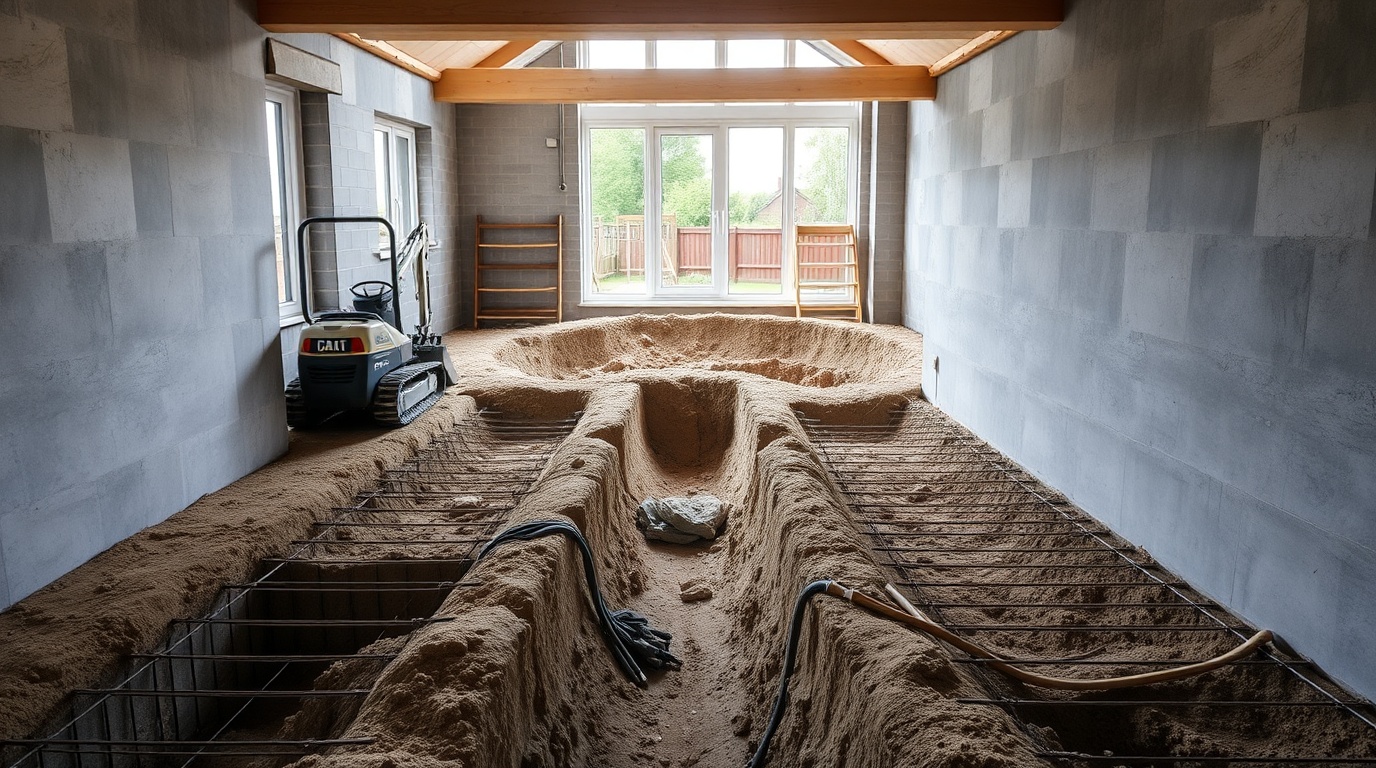
A raft foundation for a typical UK extension usually costs in the region of £8,000–£20,000+, depending on the footprint, slab thickness, reinforcement and ground preparation needed, with small simple rafts sometimes lower and large or heavily engineered slabs higher. Because a raft is a single reinforced concrete slab spreading load over the whole footprint, it is priced on area, concrete volume and steel rather than trench metres, and it almost always needs a structural engineer's design. A raft is chosen where the ground is weak, variable or made-up, or where deep trenches would be impractical — situations where it can actually work out cheaper and quicker than very deep trench fill. The design must satisfy Part A of the Building Regulations and is inspected by Building Control.
Raft foundations are quoted very differently from a strip or trench fill, because you are paying for an engineered slab rather than a dug trench. Here is what goes into the figure.
Raft foundation costs
- Typical extension raft~£8,000–£20,000+
- Priced onArea, concrete, steel
- DesignStructural engineer required
- Used whenWeak / variable / made ground
- Sign-offBuilding Control + Part A
What you are paying for
- Excavation and preparation: reduced-level dig, compacted sub-base and a separation/blinding layer across the whole footprint.
- Reinforcement: steel mesh or bar designed for the loads and ground, often thickened into beams at the edges and under walls.
- Concrete: a substantial volume across the area, sometimes with an edge thickening (toe) for frost protection.
- Engineering and inspection: a structural engineer's design and calculations, plus Building Control inspection of the prepared base and steel before the pour.
| Cost driver | Effect | Notes |
|---|---|---|
| Footprint area | Major | Larger slab = more concrete & steel |
| Slab / beam thickness | Major | Set by loads and ground |
| Ground preparation | Moderate | Soft ground needs more sub-base |
| Engineer's design | Fixed-ish | Always required for a raft |
Indicative cost drivers for guidance. Sources: Checkatrade foundation cost guides; NHBC Standards Chapter 4.
When a raft is the right call
A raft is not a luxury upgrade; it is a response to ground conditions. It suits made-up or variable ground where soft pockets would undermine a strip footing, low-bearing soils where spreading the load over a wide area reduces pressure, and sites where digging deep trenches is impractical (for example over old fill or services). On such ground a raft can be cheaper and faster than very deep trench fill or piling. It is less suited to deep shrinkable clay near trees, where piled foundations with ground beams are often preferred.
How a raft is approved
A raft is a designed structure, so your Building Regulations application normally includes the engineer's calculations and drawings. Building Control will inspect the prepared base, the reinforcement and any edge beams before concrete is poured, checking they match the approved design and satisfy Part A. As with any foundation, do not pour until the inspection has been passed.
Raft vs trench fill vs piles on a budget
It helps to see where a raft sits against the alternatives, because the headline price can mislead. A raft uses a lot of concrete and steel across the whole footprint, so on good, firm ground it is usually dearer than a simple strip or shallow trench fill that only needs concrete in the trenches. Its value appears on poor ground, where the alternatives become expensive in their own right.
- Versus deep trench fill: if reaching firm ground would mean digging trenches well beyond a metre or two, the concrete and labour in that deep trench can rival a raft — and a raft avoids the risk and disruption of very deep excavation.
- Versus piling: piling reaches a firm stratum far below and suits deep soft ground or shrinkable clay near trees; a raft instead spreads load near the surface and suits variable or made-up ground where there is no convenient deep stratum. Piling carries specialist plant and design fees that a raft avoids, but a raft cannot solve every deep-ground problem.
Two further costs are easy to overlook when budgeting for a raft: the ground investigation and engineer's design, which a raft always needs, and the ground preparation — soft or contaminated ground may require extra dig and imported sub-base before the slab can be cast. Getting a quote that itemises excavation, sub-base, reinforcement, concrete, edge thickening and design lets you compare a raft fairly against trench fill or piles, rather than reacting to a single bottom-line number that hides what the ground actually demands.
Types of raft and what each one is for
"Raft" is not a single product, and the type specified changes both the price and where it suits. Knowing the main forms helps you read a quote and understand why one raft costs more than another.
- Flat (solid) slab raft: a uniform reinforced slab, sometimes with a thickened edge (a toe) for frost protection. The simplest form, used for lighter, evenly loaded structures on reasonable but variable ground.
- Beam-and-slab (stiffened) raft: a slab stiffened with downstand or upstand beams under the walls, so it can carry heavier or more concentrated loads and bridge softer pockets. More steel and concrete, so dearer, but stiffer.
- Cellular or piled raft: for the worst ground, a raft can be combined with piles or made cellular for extra stiffness — specialist and at the top of the cost range.
The engineer chooses the form from the loads and the ground investigation, then details the reinforcement, the edge thickening and any movement provisions. That is why a meaningful raft quote itemises excavation, sub-base, blinding, reinforcement, concrete and edge detail rather than giving a single rate per square metre — two rafts of the same footprint can differ widely in steel and thickness. It is also why a raft almost always needs a structural engineer: getting the slab and beam design wrong on poor ground risks differential settlement that cracks the building later. Spend on the ground investigation and the design first, and the slab itself becomes a predictable cost; skip it, and the raft can become an expensive way to lock a problem into the structure.
Frequently asked questions
Is a raft foundation cheaper than trench fill?
It can be. On weak or made-up ground where trenches would have to go very deep, a raft is often cheaper and quicker. On normal firm ground, a strip or trench fill is usually cheaper than an engineered raft.
Do I need a structural engineer for a raft?
Yes, almost always. A raft is a reinforced, designed slab, so it requires a structural engineer's calculations and drawings, which form part of the Building Regulations submission.
What ground suits a raft foundation?
Weak, variable or made-up ground, low-bearing soils, and sites where deep trenches are impractical. It is less suited to deep shrinkable clay near trees, where piling is often preferred.
Sources & further reading
- Checkatrade — foundation cost guide
- NHBC — Standards Chapter 4 (foundations)
- Planning Portal — Approved Document A (structure)
Figures on this page are typical UK ranges drawn from published sources and depend on your specific site. They are guidance, not a quotation.