The short answer
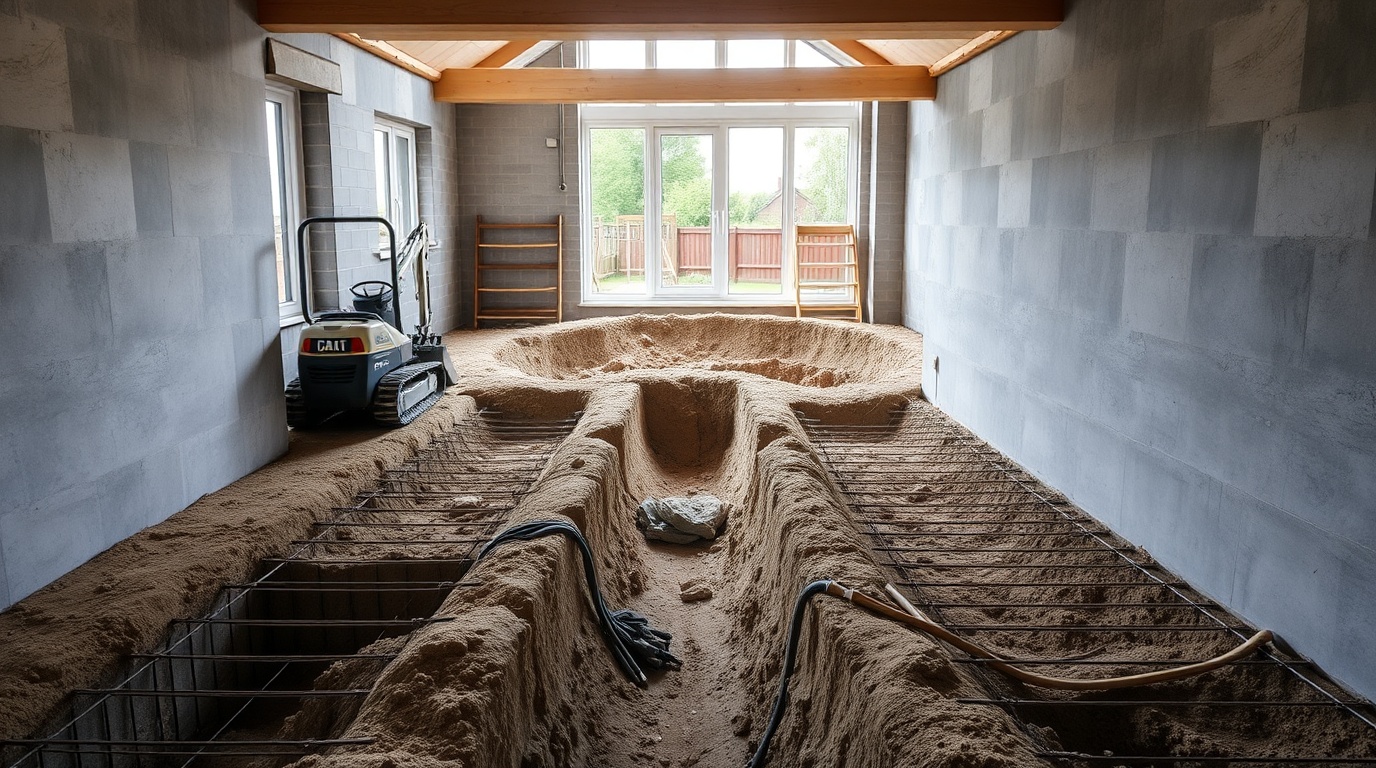
Levelling a sloping site in the UK ranges enormously — from around £2,000–£5,000 for a modest garden on a gentle slope to £15,000–£40,000+ for a steep plot needing substantial earthworks and retaining walls. The reason for the spread is that levelling is rarely just moving soil: a slope is usually levelled by cut and fill (digging the high side, filling the low side), and the filled ground often needs a retaining wall to hold it, which is frequently the single largest cost. Add muck away for surplus spoil or imported fill where there is a shortfall, plus the access difficulties typical of sloping plots, and the figure depends almost entirely on the specific site. Steeper slopes and tall retaining structures push it up fastest.
Levelling a slope is an earthworks-and-structures job, not just a dig, which is why quotes vary so widely. The figures below are typical UK ranges, with the elements that make up the cost.
Typical UK costs
- Gentle slope, small garden£2,000–£5,000
- Steep plot with retaining£15,000–£40,000+
- Retaining walloften the largest cost
- Digger + operator£300–£600 / day
- Muck away / imported fill£250–£400 per load
How a slope is levelled: cut and fill
The standard method is cut and fill: excavate material from the higher part of the slope (the cut) and use it to build up the lower part (the fill), creating a level platform. Ideally the volumes balance, so little material has to leave or come onto site. In practice they rarely match exactly:
- A surplus of spoil means muck away — grab-lorry loads at around £250–£400 each plus tipping.
- A shortfall means imported fill, which must be a suitable, compactable material, also charged by the load.
Filled ground must be placed and compacted in layers to be stable enough to build on or to support a garden, because loose fill settles unevenly over time. Where the level is changed significantly, an engineer may need to specify the fill and compaction.
| Element | Typical figure | Notes |
|---|---|---|
| Earthworks (cut & fill) | from £2,000+ | scales with volume and slope |
| Retaining wall | often £1,000s–£10,000s | height and length dependent |
| Muck away / import (per load) | £250–£400 | surplus or shortfall of fill |
| Digger + operator | £300–£600 / day | size suited to access |
Indicative UK figures for guidance. Sources: Checkatrade landscaping and groundworks cost guides.
Retaining walls drive the cost
The moment you create a level platform on a slope, you usually need something to hold back the higher ground or the fill — a retaining wall. This is frequently the largest single item, because a retaining structure resists real lateral pressure and must be properly designed, founded and drained. Cost rises steeply with height: a low garden retaining wall is modest, but a tall wall holding back several metres of ground needs engineered foundations, reinforcement and land drainage behind it, and can run into many thousands of pounds.
Material choice — timber sleepers, blockwork, reinforced concrete, gabions or natural stone — also changes the figure. For walls above a certain height, or where they affect a boundary or a neighbour's land, design input and sometimes Building Control or party-wall considerations apply. This is why a steep plot costs so much more than a gentle one: it is the retaining, not the digging, that dominates.
Slope severity, access and approvals
Three things decide where in the range your site lands. Slope severity sets the volume of cut and fill and the height of any retaining — a gentle fall is cheap to terrace, a steep bank is a major earthworks project. Access is often worse on sloping plots, where machines and lorries struggle on the gradient or cannot reach part of the site, forcing smaller plant, longer hauls and sometimes craning materials in.
There are also approvals to consider. Significant changes in ground level, large retaining walls or works near boundaries can need planning permission, and structural retaining usually needs engineered design and Building Control. Surplus or imported soil must be handled correctly — removed spoil through a registered waste carrier, and imported fill of a suitable, clean grade. Because so much depends on the individual gradient, ground and access, a site assessment is essential; the ranges here are for sizing the budget, not for quoting a specific plot.
Alternatives to full levelling
Levelling an entire slope is the most expensive way to make it usable, and it is not always the right one. Depending on what you want from the space, gentler approaches can cost far less:
- Terracing: creating two or three smaller level areas stepped down the slope, with low retaining between them, instead of one large platform and one tall wall.
- Cut-only or fill-only: if the design allows, cutting into the bank for a sunken patio, or building out over the low side on posts or a raised deck, can avoid moving the whole slope.
- Working with the gradient: stepped paths, planted banks and raised beds can turn a slope into a feature rather than fighting it.
Terracing in particular often costs much less than a single large level because it replaces one expensive tall retaining wall with two or three modest ones, and it balances the cut and fill more evenly so less material leaves or comes onto site. Where the goal is simply usable outdoor space rather than a flat plot for a building, these alternatives can deliver most of the benefit at a fraction of the cost — worth weighing before committing to full levelling.
Frequently asked questions
Why does levelling a steep slope cost so much more than a gentle one?
A steep slope needs far more cut-and-fill earthworks and, crucially, taller retaining walls to hold back the ground. Retaining structures are often the largest single cost because they must be engineered, founded and drained, and that cost rises sharply with height — so a steep plot can cost many times more than a gentle one.
Do I need planning permission to level my garden?
Often, yes, for significant level changes, large retaining walls, or works near a boundary. Small, modest re-grading may fall within permitted development, but it varies by site and locality. Check with your local planning authority before major earthworks, and note that structural retaining walls also involve Building Control.
Can I reuse the soil I dig out when levelling?
Frequently, yes — cut-and-fill aims to reuse excavated material as compacted fill on the lower part of the slope, minimising both muck away and imported fill. Only the surplus, or material unsuitable for fill, needs removing, and any shortfall is made up with suitable imported fill placed and compacted in layers.
Sources & further reading
- Checkatrade — garden levelling / landscaping cost guide
- MyJobQuote — retaining wall cost guide
- GOV.UK — planning permission
Figures on this page are typical UK ranges drawn from published sources and depend on your specific site. They are guidance, not a quotation.