The short answer
Digging foundation trenches in the UK is usually priced by the linear metre of trench or by machine-and-operator day, commonly working out around £25–£70 per linear metre for the excavation and muck away on standard footings, with a digger and operator at roughly £300–£600 a day. The cost climbs with depth — set by Building Control and the soil, not by choice — and with ground conditions: heavy clay is slow, rock may need a breaker, and a high water table means pumping and possibly shoring the sides for safety. Muck away for the spoil, at £250–£400 per grab load plus tipping, is a separate and often larger cost. Trenches near trees or on shrinkable clay go deeper, using more time, spoil and concrete, so the figure is always tied to the specific site.
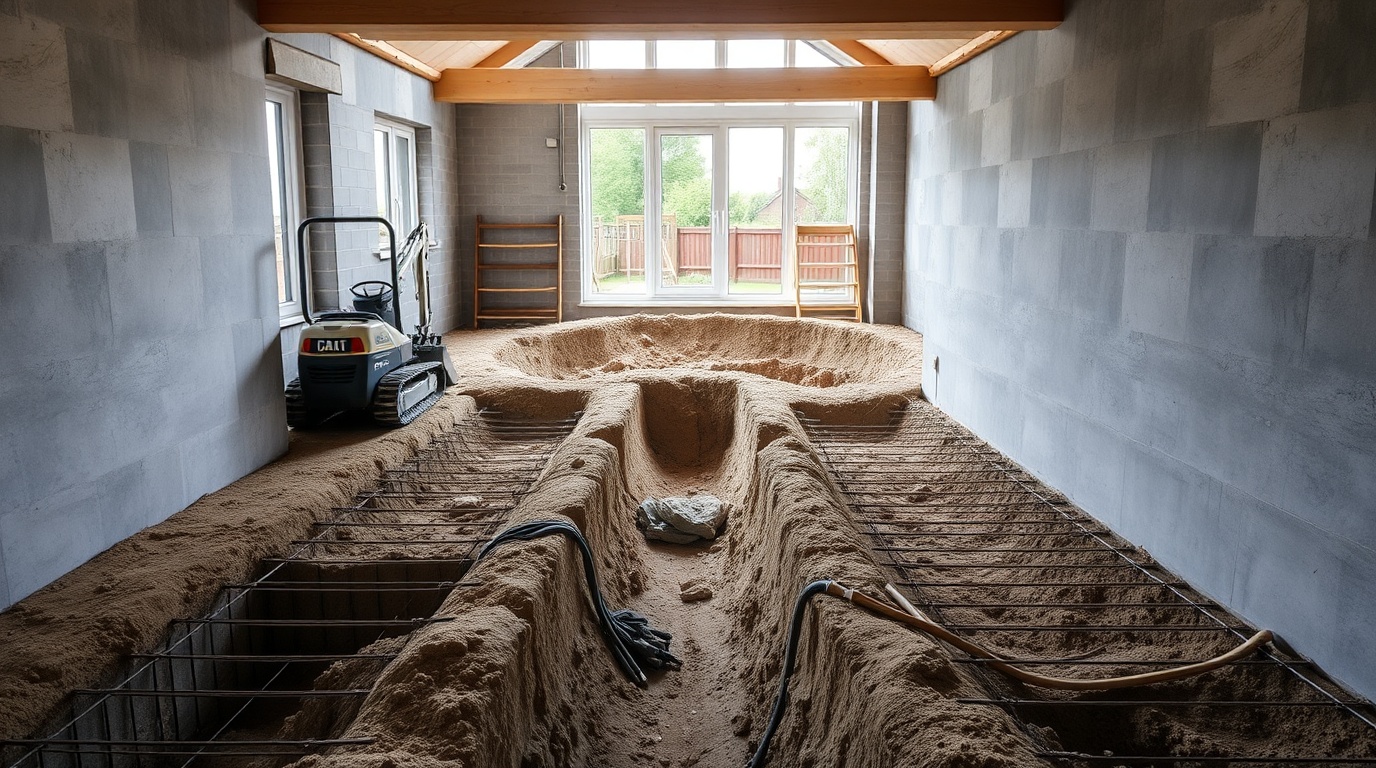
Foundation trenches are the channels excavated for the footings that carry the walls. The figures below are typical UK ranges for the dig and muck away, with the factors that set them.
Typical UK costs
- Trench excavation per linear metre£25–£70
- Digger + operator£300–£600 / day
- Muck away (grab load)£250–£400
- Depthset by Building Control
- Near trees / claydeeper, costlier
How trench digging is priced
Foundation trench excavation is quoted two common ways, often together:
- Per linear metre: a rate covering the dig along each metre of trench, typically £25–£70/m depending on depth, width and disposal. Useful where the foundation layout is fixed.
- By the day: a digger and operator hired by the day at £300–£600, suiting variable or uncertain ground.
Both exclude the concrete and steel that fill the trench — those are separate items. The excavation is the part most affected by soil and access, so it is where prices diverge. Remember the cost has three components again: the dig, the muck away, and the disposal (tipping plus Landfill Tax), with removal frequently outweighing the digging itself.
| Item | Typical figure | Notes |
|---|---|---|
| Trench excavation per linear m | £25–£70 | dig + muck away, varies with depth |
| Digger + operator | £300–£600 / day | by-the-day alternative |
| Muck away (grab load) | £250–£400 | ~14–16 tonnes |
| Deep trench fill near trees | adds significantly | more spoil and concrete |
Indicative UK figures for guidance. Sources: Checkatrade and MyBuilder foundations cost guides.
Depth is set for you
You do not get to choose how deep the trenches go — Building Control, with a structural engineer where needed, sets the depth from the soil type, the load and any nearby trees. On firm, stable ground away from trees, footings may be relatively shallow. On shrinkable clay, or close to trees that draw moisture and move the ground, foundations must reach below the zone affected by seasonal movement and root activity — often beyond a metre, sometimes much deeper.
Deeper trenches cost more on three counts: more excavation time, more spoil to remove, and more concrete to fill them, since deep footings on clay are frequently built as trench fill rather than strip. This is why a foundation quote cannot be firm until the depth is known, and why the dig near trees is one of the more expensive groundworks scenarios.
Soil, water and access
Beyond depth, the ground itself drives the figure. Soft, even soil digs fastest; heavy clay is slow and sticky and harder to load and tip; rock or old concrete may need a breaker attachment, dramatically slowing progress. A high water table fills the trench with water, needing pumping, and may require shoring to hold the sides safe — trench collapse is a serious hazard, so deep trenches must be supported or battered back in line with health-and-safety practice.
Access shapes the price as on any dig: a plot a full-size excavator and grab lorry can reach is efficient, while a confined rear garden forces a mini-digger, slower working and barrowing spoil out, often into a skip. And buried services crossing the foundation line must be located and worked around carefully, adding hand-digging time. Because depth, soil, water and access all interact, a site visit and the Building Control depth are the only reliable basis for a firm price; the ranges here are for budgeting.
Strip footings versus trench fill
How the trench is filled affects both the dig and the overall cost, and the two common approaches suit different ground:
- Strip foundations: a relatively shallow trench with a band of concrete in the bottom, on which the walls are built up in blockwork below ground. Uses less concrete but more labour and time below ground, and suits firm, stable soil at modest depth.
- Trench fill: a narrower, deeper trench filled with concrete almost to the top, so little or no below-ground blockwork is needed. Uses far more concrete but is quicker on labour, and is common on clay or near trees where foundations must go deep.
On a deep dig near trees, trench fill is often chosen precisely because building blockwork up from the bottom of a deep, possibly wet trench is slow and awkward, whereas pouring concrete to near the surface is fast. The trade-off is concrete volume: a deep trench-fill foundation can use a large amount of concrete, which is a significant cost in its own right. Your engineer or Building Control will indicate which approach the ground calls for, and that decision shapes the budget as much as the excavation itself.
Frequently asked questions
How deep should foundation trenches be?
There is no fixed depth — Building Control and, where needed, an engineer set it from the soil, the load and nearby trees. Shallow footings can suit firm ground away from trees, while shrinkable clay or proximity to trees often pushes the depth beyond a metre. The open trench is usually inspected before concrete is poured.
Does the trench digging price include the concrete?
Usually not. The excavation and muck away are separate from the concrete, reinforcement and any blockwork. Because deep trenches on clay use a lot of concrete (often as trench fill), the concrete can be a major cost in its own right, so confirm exactly what an excavation quote covers before comparing prices.
Why do deep trenches need shoring?
An unsupported trench can collapse, which is a serious and sometimes fatal hazard. Deeper trenches are therefore either shored (supported with proprietary trench boxes or props) or have their sides battered back to a safe angle, in line with health-and-safety requirements. This support adds time and cost but is essential for anyone working in the trench.
Sources & further reading
Figures on this page are typical UK ranges drawn from published sources and depend on your specific site. They are guidance, not a quotation.