The short answer
Ground reduction in the UK typically costs £15–£40 per square metre to dig, rising to £40–£90 per square metre once spoil disposal is included, for a standard reduction depth. Ground reduction — also called a reduced-level dig — is excavating an area down to a uniform, lower level to receive a slab, sub-base or building platform. The rate depends almost entirely on the depth of reduction and the cost of muck away, since the soil removed must be carted to a licensed tip. Hard ground, contamination and poor access push it higher. Deep reductions forming part of a building must be set to the structural engineer's levels and inspected by Building Control.
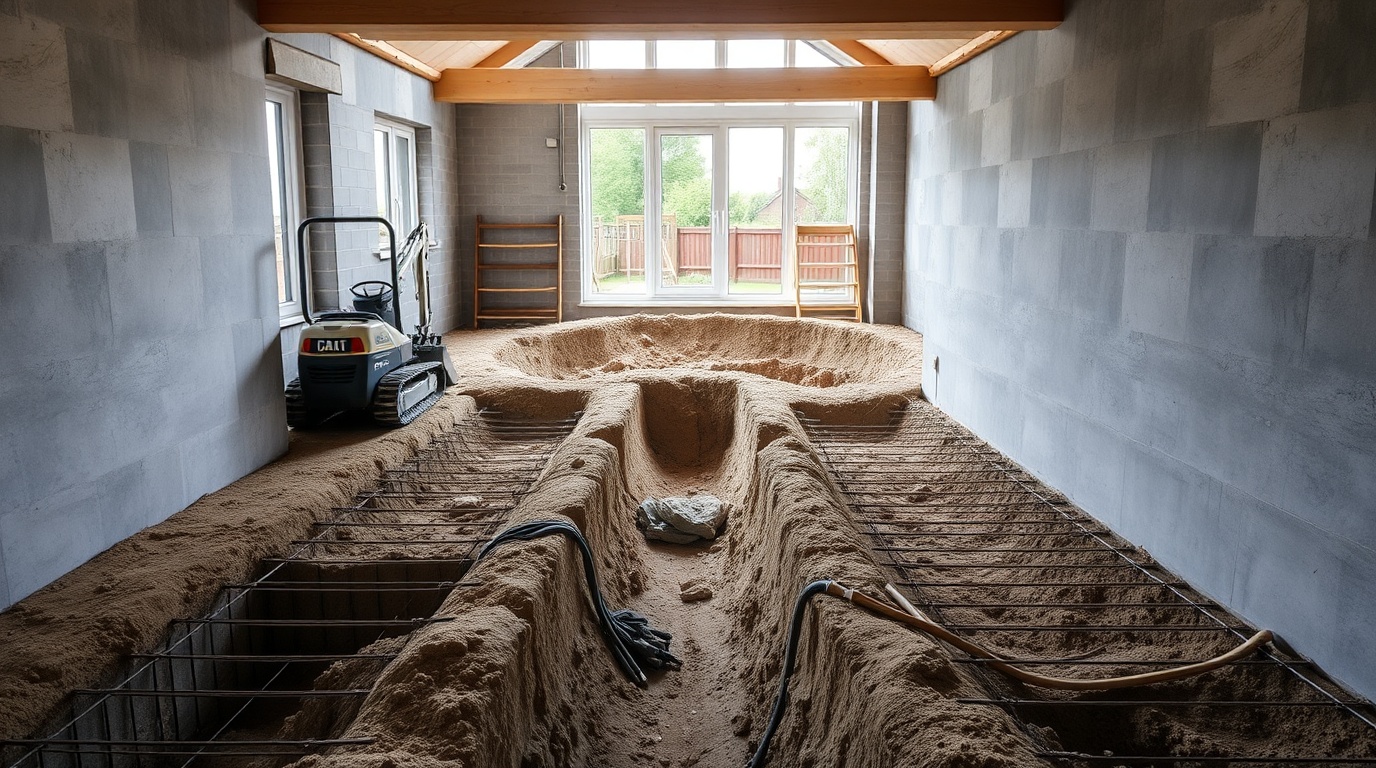
Ground reduction is the dig that creates a level, lower platform across a whole area, as distinct from trenching for foundations. It is priced per square metre, but depth and disposal dominate the figure. The sections below explain the rate and what moves it.
At a glance
- Dig only~£15–£40/m²
- Dig + muck away~£40–£90/m²
- Main driverDepth + disposal
- Also calledReduced-level dig
- Hard ground / rockAdds 30–60%
Typical ground reduction costs
Ground reduction is priced per square metre of area, but the real cost lever is the depth reduced, because that sets the volume of soil to remove. A shallow reduction of 150mm to receive a sub-base costs far less than a deep reduction of 500mm or more to create a level platform on a slope. The table shows indicative rates including disposal at common depths; the deeper the cut, the higher the per-metre figure.
| Reduction depth | Indicative cost per m² (incl. disposal) | Notes |
|---|---|---|
| Shallow (~150mm) | £30–£55 | Sub-base preparation |
| Medium (~300mm) | £45–£75 | Slab platform |
| Deep (~500mm+) | £65–£110 | Levelling, sloping site |
| Hard ground / rock | +30–60% | Breaker, slower |
| Contaminated spoil | Much higher | Special disposal |
Indicative figures for guidance only. Depth and disposal cost dominate the rate.
Why disposal drives the cost
As with any large excavation, the removal of spoil usually costs more than the digging. Ground reduction over a whole area generates a large volume of soil — far more than narrow foundation trenches — and that soil bulks up by 20–30% when loosened, so the volume to cart away is greater than the neat reduction suggests. Each lorry load carries both haulage and a tipping fee, and a deep reduction across a large platform can mean many loads, each a fixed cost.
The disposal figure jumps if the spoil is contaminated — made-up ground, old hardcore, tarmac or industrial residues all push it into a higher waste classification with much higher tipping fees and sometimes mandatory testing. This is why ground reduction on a former yard or developed site can cost several times more than on clean ground. The most effective saving is to reuse clean spoil on site where the design allows — using cut material to fill or raise levels elsewhere on the plot avoids disposal entirely. On a sloping site, a well-planned cut-and-fill balance, where soil removed from the high side fills the low side, can dramatically reduce the muck away bill and is one of the biggest cost levers in the whole groundworks package.
Ground reduction versus foundation trenching
It helps to be clear how ground reduction differs from the foundation digging that often follows it, because the two are separate operations priced differently. Ground reduction removes soil across a whole area to bring it down to a uniform formation level — a broad, shallow-to-medium cut over the footprint. Foundation trenching then digs narrow, deeper lines within or around that area for the strip or trench-fill foundations. They are sequential: you reduce the level first, then trench from the reduced level for the footings.
The distinction matters for cost because the two have different profiles. Ground reduction is a high-volume, lower-depth operation where the cost is dominated by the sheer quantity of spoil removed across the area. Foundation trenching is a lower-volume but deeper operation where the cost is driven by depth, the difficulty of digging narrow trenches, and the concrete that fills them. A quote that lumps them together as one figure can obscure which is driving the cost, so it is worth seeing them itemised. On a sloping site, the ground-reduction element can be the larger of the two because creating a level platform moves so much soil; on a flat site with deep foundations, the trenching can dominate. Understanding which operation your site demands more of tells you where the money is going and where any saving — such as balancing cut-and-fill to cut the reduction spoil — can realistically be found.
What else changes the rate
Beyond depth and disposal, ground hardness is a major factor. Soft soil digs quickly, but compacted clay, hardcore or rock needs a breaker attachment and slows the machine, raising the per-metre cost by a third or more. Access determines the plant and method — an open site an excavator and grab lorry can work directly is far cheaper than one where soil is barrowed by hand or where a small machine is the only option that fits. Area and shape affect efficiency: a large, simple rectangle reduces quickly, while a small or awkward area carries a higher unit rate.
Levels and accuracy matter where the reduction forms a building platform, because the formation has to be cut to the structural engineer's design level and left undisturbed and well-drained, ready to receive the sub-base. Over-digging means paying to bring the level back up with imported fill; under-digging means re-excavating. Water is a hidden cost — reducing below the water table needs pumping and turns spoil into heavier, wetter loads that cost more to remove. And region affects haulage and tipping, with the distance to the nearest licensed tip driving a large part of the disposal element. Because ground reduction is really a volume-and-disposal job dressed up as a per-square-metre rate, the figure worth pinning down is the all-in cost including muck away at the actual reduction depth, with any contamination risk identified by a soil test beforehand rather than discovered mid-dig.
Frequently asked questions
What is ground reduction in groundworks?
Excavating an area down to a uniform, lower level — a reduced-level dig — to create a flat platform to receive a slab, sub-base or building. It differs from trenching, which digs narrow lines for foundations, because it removes soil across a whole area.
Why is ground reduction priced per square metre?
For convenience, since the area is easy to measure. But the real cost is driven by the depth reduced and the volume of soil removed, so a deep reduction over the same area costs far more than a shallow one despite the identical square metres.
How can I reduce ground reduction costs?
Reusing clean spoil on site instead of removing it, and balancing cut-and-fill on a sloping plot so soil from the high side fills the low side, are the biggest savings. Good plant access and avoiding over-digging also help keep the figure down.
Sources & further reading
- HSE — excavations safety
- Checkatrade — groundworks cost guide
- gov.uk — classify different types of waste
Figures on this page are typical UK ranges drawn from published sources and depend on your specific site. They are guidance, not a quotation.