The short answer
Excavation in the UK typically costs £15–£40 per cubic metre to dig with machine and operator, but £50–£120 per cubic metre once spoil removal (muck away) is included. The digging itself is relatively cheap; getting the soil off site is the larger and less obvious cost, because it is charged by the lorry load plus tipping fees. Hand digging where machines cannot reach is much dearer, often £60–£100/m³ for labour alone. Rates rise with hard ground, restricted access, and any contamination that classifies the spoil as hazardous, which sharply increases disposal costs. Deep excavations also need support under HSE trench safety rules.
Excavation is usually priced per cubic metre, but the digging rate alone is misleading because removing the spoil costs more than digging it. The sections below separate the two, explain disposal, and set out what moves the rate so a quote makes sense.
At a glance
- Machine dig only~£15–£40/m³
- Dig + muck away~£50–£120/m³
- Hand dig (labour)~£60–£100/m³
- Disposal charged byLorry load + tipping fee
- Contaminated spoilMuch higher disposal cost
Digging versus disposal
The headline excavation rate splits into two very different costs. Digging with a mini-digger or excavator and operator is comparatively cheap per cubic metre on open, accessible ground. Disposal — loading the spoil and carting it to a licensed tip — is usually the larger figure, because it combines haulage by the lorry load with a tipping fee that depends on the soil type. The table shows how the rate changes once disposal and access are factored in.
| Scenario | Indicative cost per m³ | Notes |
|---|---|---|
| Machine dig, spoil left on site | £15–£40 | Digging only |
| Machine dig + muck away | £50–£120 | Includes haulage + tip |
| Hand dig (no machine access) | £60–£100 | Labour only, slow |
| Hard ground / rock | +30–60% | Breaker, slower dig |
| Contaminated spoil disposal | Much higher | Hazardous tipping fees |
Indicative figures for guidance only. Disposal usually exceeds the cost of digging.
Why muck away dominates the cost
Muck away is the part of excavation people most underestimate. Once soil is dug out, it has to go somewhere legal — a licensed waste site — and that costs money in three ways: the haulage of each lorry load to the tip, the tipping (gate) fee charged by the site, and the fact that excavated soil bulks up by 20–30% when loosened, so you remove more volume than the hole's measured size. A deep foundation or a large reduced-level dig generates many loads, each a fixed cost regardless of how cheaply the digging itself was done.
Disposal cost jumps further if the spoil is contaminated — old hardcore, tarmac, asbestos traces, hydrocarbons or made-up ground with rubble all push the soil into a higher waste classification with much higher tipping fees, and may require testing and a hazardous-waste consignment. This is why excavation through a former industrial site, an old yard, or ground with buried demolition material can cost several times more to clear than clean topsoil and subsoil. Where possible, reusing clean spoil on site for landscaping or level-raising avoids disposal entirely, which is often the single biggest saving available on an excavation.
Machine dig versus hand dig
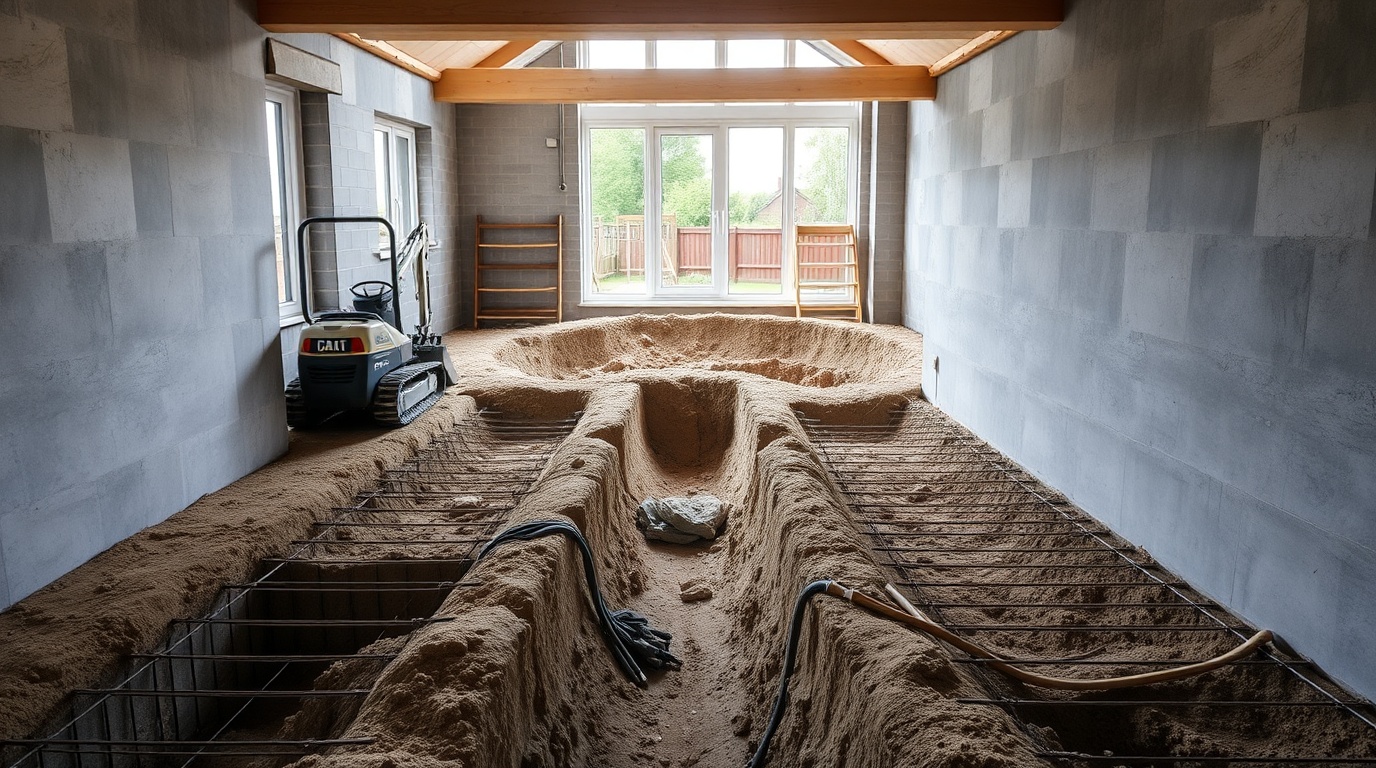
One of the biggest swings in excavation cost is whether the work can be done by machine or has to be done by hand. A mini-digger excavates many times faster than a person with a spade, so machine digging is far cheaper per cubic metre wherever a machine can reach. The problem is access: a rear garden reachable only through the house, a narrow side passage, or a site hemmed in by walls and structures may leave no way to get even the smallest machine in, forcing the dig to be done by hand.
Hand digging is slow, physically demanding and therefore expensive in labour, often £60–£100 per cubic metre for the digging alone, before the spoil is even removed — which itself has to be barrowed out by hand to a skip or grab lorry, adding more labour. This is why two excavations of identical volume can cost wildly different amounts purely because of access. Where a machine can get in, the digging is cheap and disposal dominates; where it cannot, the digging becomes the major cost. It is worth checking honestly whether the smallest available machine — micro-diggers can fit through a standard doorway — can reach the work before assuming a hand dig is unavoidable, because getting a machine to site, even with some dismantling of fences or gates, is almost always cheaper than digging by hand over any significant volume.
What else changes the rate
Beyond disposal, several factors move the digging rate. Ground hardness is significant — soft soil digs fast, but clay, compacted hardcore or rock needs a breaker attachment and slows the machine, raising the cost per metre. Access determines the plant: a site an excavator and grab lorry can reach directly is far cheaper than one where soil is barrowed by hand to a skip in the road, which can triple the effective rate. Depth matters because a deep excavation must be supported or battered back under HSE rules to prevent collapse, which adds shoring cost and reduces output.
Volume works in your favour on larger jobs, where the per-metre rate falls as fixed plant-mobilisation costs are spread over more material, while a small dig carries a higher unit rate. Water is a hidden factor — excavating below the water table needs pumping and can turn spoil into a heavier, wetter load that costs more to dispose of. Finally, region affects haulage and tipping rates, with tipping fees and the distance to a licensed site varying considerably across the country. Because the digging rate alone tells you so little, the figure worth pinning down in any quote is the all-in cost per cubic metre including disposal, broken down so you can see how much is the dig and how much is getting the spoil away.
One practical point ties all of this together: excavation is sold by the cubic metre, but the cubic metres you pay to remove are more than the neat hole on the drawing. Soil bulks up by roughly 20–30% once it is dug and loosened, so a 10m³ excavation can produce 12–13m³ of spoil to cart away, and the disposal is charged on that larger loosened volume. Wet ground is heavier still and fills lorries by weight before they look full. Knowing this stops a muck-away figure looking wrong when it exceeds the dig volume, and it is why reusing clean spoil on site — to raise levels or backfill — is the single most effective way to cut an excavation bill, because every cubic metre kept on site is a cubic metre you do not pay to bulk up, load and tip.
Frequently asked questions
Why is excavation disposal so expensive?
Because spoil must go to a licensed waste site, charged by the lorry load plus a tipping fee, and excavated soil bulks up 20–30% when loosened. Contaminated spoil costs far more again. Disposal usually exceeds the cost of the digging itself.
Can I reduce excavation costs by reusing the soil?
Often, yes. Clean excavated soil can sometimes be reused on site for landscaping or raising levels, avoiding disposal entirely — frequently the single biggest saving on an excavation. Contaminated or unsuitable spoil still has to be removed.
How much does excavated soil bulk up?
Loosened soil typically increases in volume by around 20–30% compared with the neat measured hole, so you pay to remove more than the excavation's dimensions suggest. This is why disposal volumes and costs are higher than people expect.
Sources & further reading
- HSE — excavations safety
- Checkatrade — groundworks cost guide
- gov.uk — waste classification and disposal
Figures on this page are typical UK ranges drawn from published sources and depend on your specific site. They are guidance, not a quotation.