The short answer
Groundworks for a conservatory in the UK typically cost between £2,000 and £6,000, covering the foundations, the base slab and the dwarf (low) wall the frame sits on. A small lean-to base may be nearer £2,000–£3,500, while a larger conservatory, or one on poor ground or needing a drain diversion, can reach £5,000–£8,000+. The figure covers excavation, foundation concrete, the floor slab and usually the brick dwarf wall up to the frame. Conservatories often fall under permitted development and can be exempt from full Building Regulations if under 30m² and separated from the house, but the base and any drainage still need to be built correctly.
A conservatory's groundworks are more involved than a simple slab, because most designs sit on a brick dwarf wall that itself needs a foundation. The base also has to deal with drainage and existing services. The sections below give indicative ranges, explain what the work covers, and set out the planning and regulation position.
At a glance
- Small lean-to base~£2,000–£3,500
- Typical conservatory~£3,000–£6,000
- Large / poor ground£5,000–£8,000+
- Often exempt fromFull Building Regs (<30m²)
- IncludesFoundation, slab, dwarf wall
Typical conservatory groundworks costs
Conservatory groundworks are priced by size, dig depth and how much brickwork is involved. A small lean-to with a low dwarf wall sits at the lower end; a larger Victorian or Edwardian style with more wall, or a base on clay or near a drain, costs more. The ranges below are indicative and cover the base and dwarf wall up to the point the conservatory installer fits the frame, but not the frame, glazing or roof.
| Conservatory type | Indicative groundworks cost | Notes |
|---|---|---|
| Small lean-to | £2,000–£3,500 | Low dwarf wall, simple base |
| Standard (e.g. 3m × 3m) | £3,000–£5,000 | Foundation, slab, dwarf wall |
| Larger / dwarf-wall style | £4,500–£7,000 | More brickwork and dig |
| Poor ground / clay | +20–40% | Deeper foundations |
| Drain diversion needed | +£800–£2,000 | Build-over or divert |
Indicative figures for guidance only. Excludes the frame, glazing and roof.
What the groundworks cover
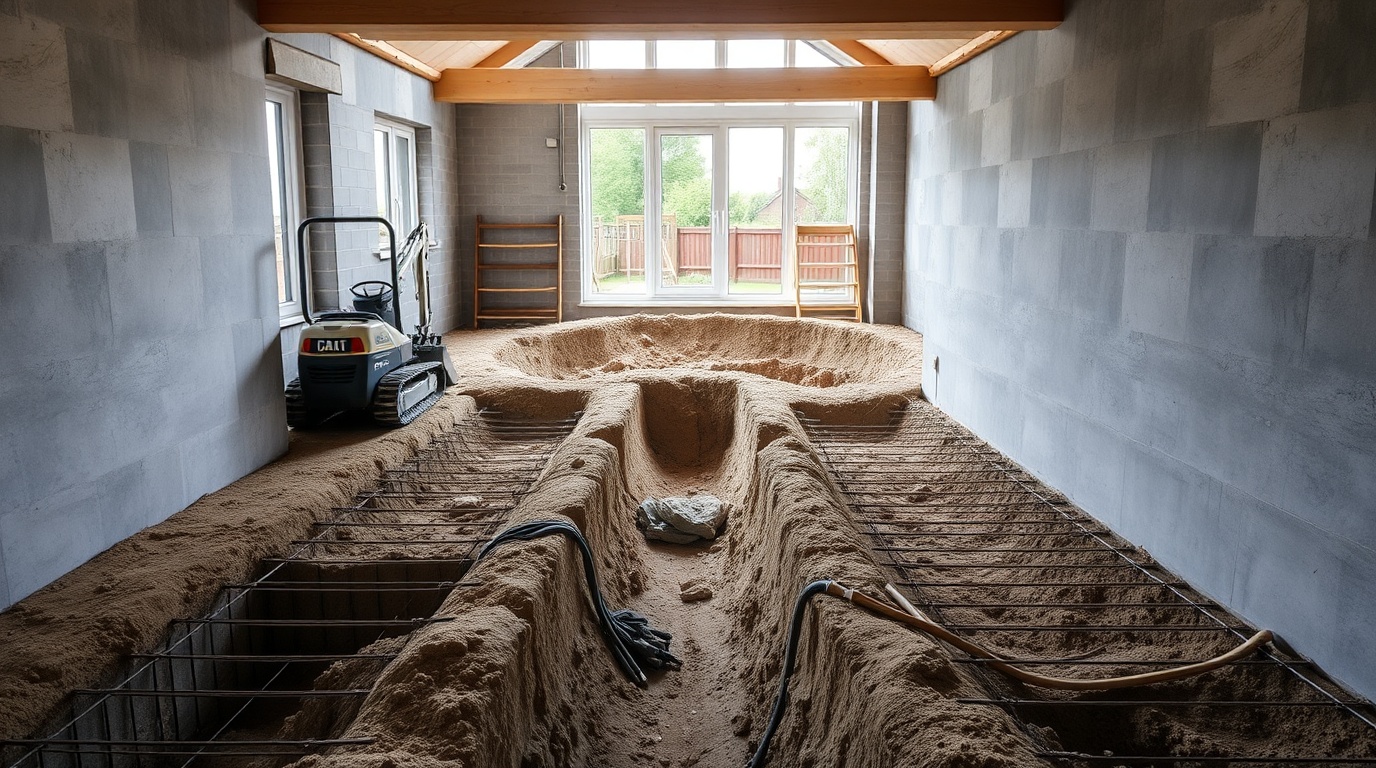
Conservatory groundworks usually run from breaking ground to a finished base ready for the frame. They include excavation of the foundation trench and reduced-level dig, foundation concrete under the dwarf wall, the brick dwarf wall itself built up to the height the frame sits on, and the floor — typically a concrete slab on hardcore, a damp-proof membrane and insulation, ready for tiling or a finished floor. They also cover spoil disposal and any drainage within the footprint.
Because a conservatory attaches to the existing house, the groundworks often have to deal with the wall it abuts — checking the existing foundation, the damp-proof course level and any vents that must not be covered. What the groundworks do not include is the conservatory frame, glazing and roof, which the installer supplies and fits, or the internal finishes. A frame supplier's all-in price may or may not include the base, so it is worth confirming whether the base is in the conservatory quote or a separate groundworks cost — this is a common point of confusion that affects the total.
The dwarf wall and tying into the house
What makes a conservatory base more involved than a simple slab is the dwarf wall — the low brick or block wall, typically a few courses high, that the glazed frame sits on. That wall needs its own foundation running around the perimeter, dug and poured to a suitable depth, before the brickwork is built up to the height the frame requires. The amount of dwarf-wall brickwork is one of the main cost differences between conservatory styles: a full-height glazed lean-to has very little, while a traditional dwarf-wall conservatory has brickwork all the way round, which is more foundation, more bricklaying and more cost.
Because a conservatory attaches to the existing house, the groundworks also have to deal carefully with the junction to the main building. The new base and dwarf wall must relate correctly to the house's existing foundation and, critically, to its damp-proof course — the conservatory floor and wall must not bridge the damp-proof course or block air bricks, or damp will track into the house. The existing wall may need checking for its foundation depth where the new structure abuts it. These details are routine for an experienced groundworker but are exactly the kind of thing that goes wrong when a conservatory base is treated as a simple slab. Getting the dwarf-wall foundation, the floor level relative to the damp-proof course, and the ventilation right at this stage is what keeps the finished conservatory dry and avoids transferring a damp problem into the house behind it.
Planning, regulations and what drives the price
Conservatories occupy a special position in the rules. Many are permitted development, needing no planning application, provided they stay within size and height limits and do not extend too far beyond the original house — though limits are tighter on the side, near boundaries, and in conservation areas, so checking with the local authority is wise. On Building Regulations, a conservatory can be exempt from the full requirements if it is built at ground level, is under 30 square metres, is separated from the house by external-quality doors, and has its own independent heating controls. Lose any of those conditions and it becomes a regular extension needing full approval, which changes both the build and the cost.
On price, the main drivers are size and the amount of dwarf-wall brickwork, ground conditions (clay or made-up ground means deeper foundations and more spoil), and drainage. Drainage is the classic conservatory complication: because the build is at the back of the house, it frequently sits over or beside an existing foul drain. Building over a public sewer needs a build-over agreement with the water company, and a private drain that crosses the footprint may need diverting or rerouting, both adding cost and time. Access matters too, as rear gardens are often reached only through the house, meaning materials and spoil are barrowed by hand. Establishing the drainage and ground conditions before work starts is the best way to avoid the surprises that most often push a conservatory base over budget.
Frequently asked questions
Is the conservatory base included in the installer's price?
Sometimes, but not always. Some conservatory companies supply and fit the frame only, with the base arranged separately as groundworks; others offer an all-in price including the base. Confirm which, as it significantly affects the total cost you should expect.
Do I need Building Regulations for a conservatory?
A conservatory can be exempt if built at ground level, under 30m², separated from the house by external-quality doors and with independent heating. If it does not meet all those conditions it is treated as an extension and needs full Building Regulations approval.
What if there is a drain under my conservatory?
Building over a public sewer requires a build-over agreement with the water company, and a private drain crossing the footprint may need diverting. Either adds cost and time, so it is best identified before the groundworks begin rather than mid-job.
Sources & further reading
- Planning Portal — conservatories
- Planning Portal — Building Regulations exemptions
- Checkatrade — conservatory base cost guide
Figures on this page are typical UK ranges drawn from published sources and depend on your specific site. They are guidance, not a quotation.