The short answer
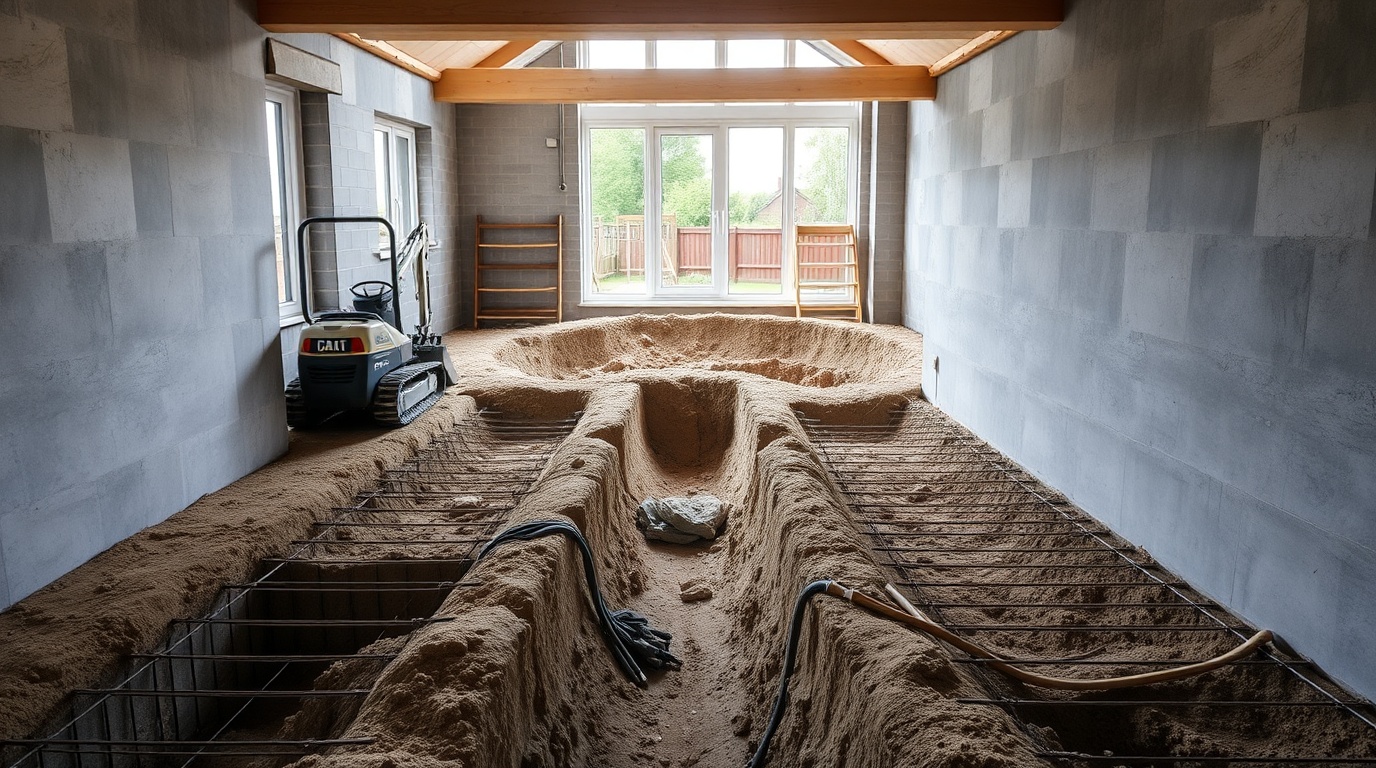
Near trees on shrinkable clay, foundations usually have to go much deeper than normal because roots draw moisture from the soil, deepening the zone where the clay shrinks and swells. The required depth depends on the tree's water demand (high, moderate or low for the species), its mature height, and its distance from the building: a high-demand tree such as oak, poplar or willow close to the extension can push trench fill to 2.5–3.0m or beyond, at which point piled foundations with ground beams often become more economic. Removing a tree before building is not a clean fix — the clay recovers moisture and can heave upwards, which itself must be designed for. NHBC Standards Chapter 4.2 sets out the depth tables, and the design is confirmed by Building Control under Part A.
Trees are the single biggest reason extension foundations on clay get expensive. The good news is the relationship is well documented; the bad news is it can mean very deep digging.
Foundations near trees
- Key riskClay shrinkage from roots
- Depth driversSpecies, height, distance
- High-demand treesOak, poplar, willow, elm
- Typical depth1.5–3.0m+ on clay
- After fellingHeave risk must be designed for
Why trees matter so much on clay
Firm clays shrink as they dry and swell as they wet. Tree roots accelerate drying by extracting large volumes of water, so the soil near a tree moves more and to a greater depth. A foundation must sit below the zone of significant movement, which near a thirsty tree can be very deep. On sand or gravel this barely matters; on shrinkable clay it dominates the design.
| Factor | Effect on depth |
|---|---|
| High water-demand species | Deeper foundations |
| Tall mature height | Larger influence zone |
| Close to the building | Deeper still |
| High clay shrinkability | Amplifies all of the above |
Indicative relationships from NHBC Standards Chapter 4.2. The actual depth comes from the tables and site assessment.
Heave: the trap when a tree is removed
It is tempting to fell a tree to allow shallower foundations, but on clay this can cause heave: with the tree gone, the clay slowly takes water back and swells, lifting foundations and slabs over months or years. This is why simply removing a tree shortly before building is not a safe shortcut — the design must account for recovery. Solutions include keeping foundations deep, using a compressible or void-former layer (such as a clayboard) beside and beneath foundations to absorb swelling, and engineering the slab independently. Mature or protected trees may also be covered by a Tree Preservation Order or conservation area rules, so check with the council before any felling.
How the design is set and approved
On clay near trees, the foundation is normally an engineered design: the species, height and distance are fed into the NHBC depth tables, the clay shrinkability is assessed (often from a soil investigation), and a depth or piled solution is specified. The drawings and any heave precautions form part of your Building Regulations submission, and Building Control inspects the open trench (or pile records) before concrete. Where depths exceed roughly 2.5m, piling with ground beams is frequently chosen over very deep trench fill on cost and safety grounds.
Hedges, removed trees and the things people forget
The risk near trees is wider than a single mature specimen in full view, and several common situations catch homeowners out.
- Hedgerows and groups: a row of hedging or a cluster of smaller trees can have a combined water demand similar to one large tree, so a thick boundary hedge near the extension is not automatically harmless.
- Trees removed years ago: if a large tree was felled a few years before you build, the clay may still be recovering moisture and swelling. Building shallow over recovering clay invites later heave, so the history of the plot matters.
- Future growth: a small tree today may be designed-for at its mature height, because foundations must cope with the tree as it will be, not as it is now.
- Neighbours' trees: a tree just over the boundary still affects your ground. You generally cannot fell a neighbour's tree, and it may be protected, so the foundation is designed around it.
Two protections sit alongside the engineering. First, Tree Preservation Orders and conservation area rules can make it an offence to fell or even heavily prune a tree without the council's consent — always check before touching one. Second, where heave is a risk, designs commonly include a compressible layer (such as a proprietary clayboard) and void formers beneath ground-bearing slabs and beside deep foundations, so the structure can tolerate the clay swelling without being lifted. The combination of the right depth or piles, plus heave precautions, plus respecting tree protection rules, is what makes building near trees on clay safe rather than a future subsidence claim.
Root barriers, piling and the engineering toolkit
Where deep trench fill becomes impractical near trees, the design has a recognised toolkit, and it is useful to know what an engineer is weighing up so the cost and method make sense.
- Piled foundations with ground beams: the most common answer where required depths exceed roughly 2.5m. Piles carry the load down past the shrinkable, root-affected clay to a stable stratum, and the walls are built off reinforced ground beams — usually more economic and safer than a very deep trench.
- Root barriers: a physical barrier installed between the tree and the foundation can limit roots reaching the soil beneath the building, reducing the moisture change in that zone. Barriers are a supporting measure, designed by the engineer, not a substitute for adequate depth.
- Heave precautions: compressible boards (clayboard) beside deep foundations and void formers beneath ground-bearing slabs let the clay swell — particularly after any tree loss — without lifting the structure.
- Suspended floors: on heave-prone clay, a suspended floor over a void is often used instead of a ground-bearing slab, so the floor does not rely on the moving clay.
The choice between these is set by the NHBC depth tables, the measured clay shrinkability, and the practicalities of the plot, and it is confirmed by Building Control under Part A. Two checks should happen before anyone commits: confirm whether the tree is protected by a Tree Preservation Order or conservation area rules, since that can rule out felling or pruning; and have the heave risk assessed if any tree has recently been, or is to be, removed. Building near trees on clay is entirely routine when designed properly — the expense and the risk come from treating depth, heave and tree protection as afterthoughts rather than as the design drivers they are.
Frequently asked questions
How close can a tree be to an extension?
There is no single distance; it depends on the species, its mature height and the clay. NHBC tables relate all three to the required foundation depth. A thirsty tree close by means deeper foundations rather than an automatic ban.
Should I cut down a tree before building near it?
Not without advice. On clay, felling can cause heave as the soil reabsorbs water and swells, lifting foundations later. An engineer must assess the heave risk, and the tree may also be protected by a TPO or conservation area.
What foundations are used near trees on clay?
Either deep trench fill below the movement zone, or piled foundations with ground beams where depths would otherwise exceed roughly 2.5m. Heave precautions such as a compressible layer are often added.
Sources & further reading
- NHBC — Standards Chapter 4.2 (building near trees)
- Planning Portal — trees and planning (TPOs)
- LABC — foundations and ground conditions
Figures on this page are typical UK ranges drawn from published sources and depend on your specific site. They are guidance, not a quotation.